In this series, I have taken you to Japan, Italy, and India, through the period following the Second World War, and examined how the country’s needs at that time shaped automotive innovations like the Kei Cars, the Vespa and the Ape, and the Hindustan Ambassador and the Premier Padmini. This article starts in 1930s France. Not the France of postcard Paris, with its boulevards and brasseries, but one that stretched beyond the city’s limits. A land of farmers, winemakers, bakers, and craftsmen who lived in villages where the roads were dirt tracks plied by horses and carts. Cars existed, but they were a luxury only the wealthy could afford. In the countryside, they were a rare sight.
Legend has it that one afternoon, Pierre-Jules Boulanger, the Vice President of Citroën at the time, was stuck on one such muddy track behind a farmer’s horse and cart. While moving slowly in his luxury vehicle, he thought about why the farmer doesn’t use a car. What would it take to make a car for a farmer? The question was simple, but the answer would take over a decade, a world war, and an extraordinary act of defiance to come to fruition. We have to thank Pierre-Jules for his role in building affordable cars.
One legendary detail was that it must be able to cross a ploughed field with a basket of eggs on the passenger seat, without breaking a single one.
Put yourself in the shoes of a farmer in the 1930s who uses a horse and cart as their means of transportation. This is exactly what Pierre-Jules did. The necessity was clear: he wanted to provide the farmer with a car that would replace their horse and cart. For this to happen, the car needed to do many things that were easy for a horse but not for a car. For example, drive through fields, carry a sack of potatoes, transport livestock, etc. In fact, the brief that he gave the engineers and designers included exactly these things.
The car had to carry four passengers. It had to transport fifty kilograms of cargo – a sack of potatoes, a barrel of wine, whatever produce the farmer wanted to take to the market. It had to be simple for rural men and women to drive and cheap to own and run. One legendary detail was that it must be able to cross a ploughed field with a basket of eggs on the passenger seat, without breaking a single one.
A project was created, named the TPV – Toute Petite Voiture, or “Very Small Car.” Pierre-Jules selected a group of engineers with backgrounds relevant to the car’s target customers. These weren’t graduates from top French universities. Rather, they came from humbler backgrounds, having studied while working, often in night schools. He believed that this group would bring practical ingenuity entirely in line with the car they were tasked with building.
The TPV was ready by 1938. It epitomized minimalism. A single headlight, a body made from lightweight alloy, no exterior door handles, hammock seats suspended from the roof, and a hand-pulled starter were some of the “features” offered. It was all “function” and no “style”. Pierre-Jules planned to introduce it to the world at the Paris Motor Show.
Throughout the war, he kept the Germans guessing with misdirection and other techniques to the point that he was declared an official enemy of the Reich.
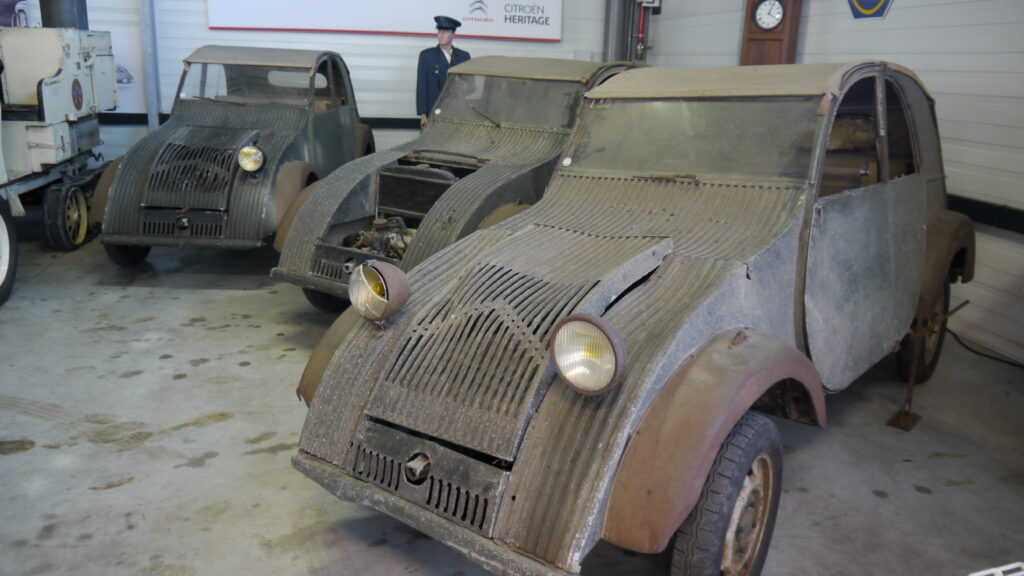
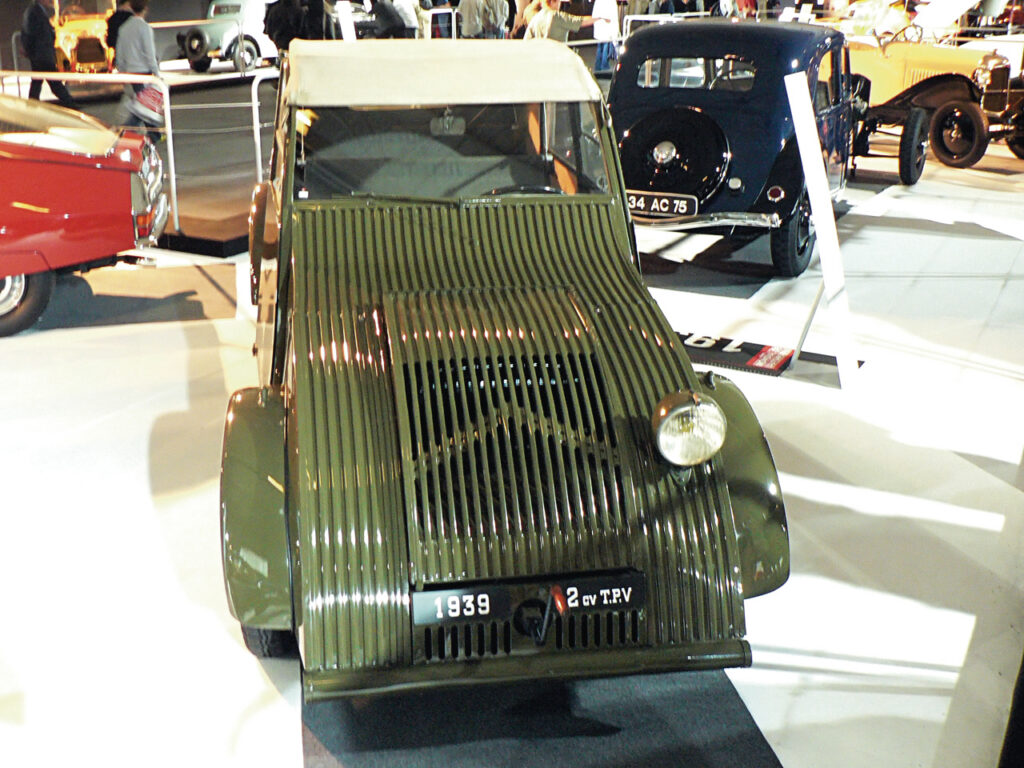
Image Credits:
Left: Three unrestored TPVs, Klaus Nahr from Germany, CC BY-SA 2.0 via Wikimedia Commons
Right: Restored TPV, Ton1~commonswiki, CC BY-SA 3.0 via Wikimedia Commons
But then, World War II! The world order changed overnight. Paris Motor Show’s cancellation was the least of Pierre-Jules worries. He had greater concerns, the most important being to keep the TPV prototypes out of German hands. He took extraordinary measures to have them hidden across the country – burying some, stashing some in haylofts, and tucking some away in attics. Throughout the war, he kept the Germans guessing with misdirection and other techniques to the point that he was declared an official enemy of the Reich.
Officially, no work was done on the car during the war, but in the shadows, engineers quietly continued work on it, adding several improvements. By the end of the war, the car had evolved considerably. The lightweight alloy body was replaced by thin steel. The engine was redesigned to be an air-cooled, flat-twin unit. The suspension – the most crucial element for the rural conditions – had been reworked completely to better suit the conditions. The Germans remained completely unaware of all this work.
Finally, the war ended! The team got back together, and the car’s development was completed. At the 1948 Paris Motor Show, a decade late, the Deux Chevaux (2CV) or “two horsepower”, a reference to the contemporary French tax horsepower rating system, was unveiled. The immediate reaction from the show visitors and the press was unsympathetic. The car was ridiculed for its looks. Journalists were especially harsh with their criticism, calling it the Tin Snail or Umbrella on Wheels.
The target market – the farmers and working families – saw something entirely different. They saw a car that they could afford to buy, run, and fix with minimal tools. They saw a car that could brave the roads and the muddy fields, but could also drive their families to the church on Sundays. The reaction from this group was overly positive. Orders for the car started flowing in, soon leading to a years-long waitlist.
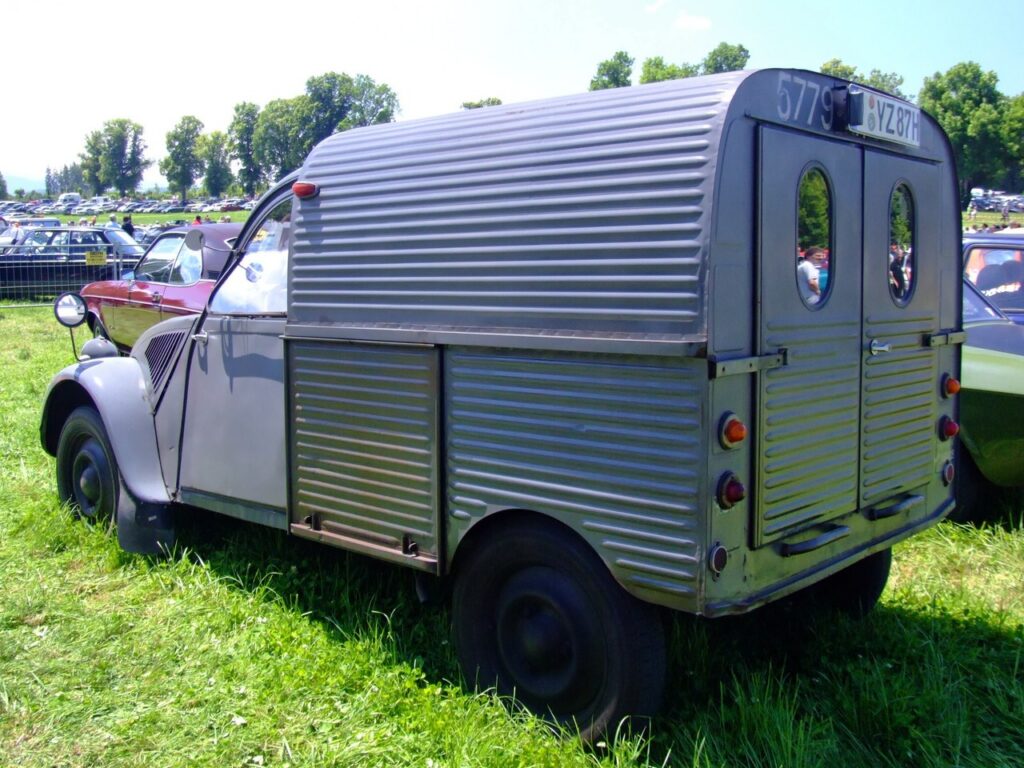
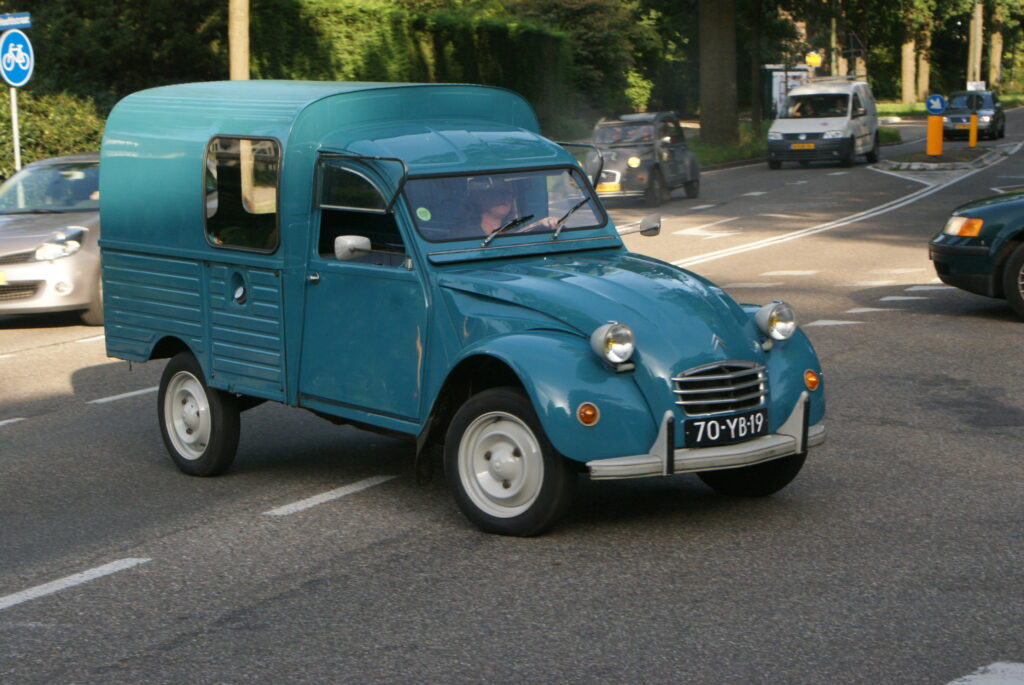
Image Credits:
Left: Early Fourgonnette van, Public Domain via Wikimedia Commons
Right: 1974 Fourgonnette van, Niels de Wit from Lunteren, The Netherlands, CC BY 2.0 via Wikimedia Commons
The 2CV customer base kept growing. The simplicity of its platform enabled several variations, such as the Fourgonnette delivery vans, which expanded its potential beyond a family car to truly serve the workmen. It was exported to countries worldwide. Introduced in 1948, it became even more relevant when the oil crisis hit in the 1970s. In fact, the 1973 oil crisis led to a renewed interest in the 2CV, especially among younger buyers drawn to its frugality.
The production finally ended in 1990, after 3.9 million units were built. Taking into account all the variations, the total was well over nine million. Much like the Model T, the 2CV is one of the best examples of a product introduced because its creator knew of its necessity even before its buyers did. That knowledge came from an observation on a rainy day on a muddy road: even ordinary people needed a better way to get where they wanted to go. It is one of the most honest reasons to build a car, and it showed in the results.
