Image: AI Generated
Post World War II, Europe was divided into two parts. Countries directly under the Soviet Rule or influence formed the Eastern Bloc, governed by a Communist regime and following a Socialist Economy. Countries behind the Iron Curtain, as they were referred to, sought to establish close ties and supported each other through the formation of the Comecon (Council for Mutual Economic Assistance). On the other side were the Western countries – independent democracies with capitalist economies.
The Eastern Bloc nations recognized the need to provide citizens with means of personal transportation. The economic system, however, limited the investment that they could make in building a thriving automotive industry.
During the decades following WWII, Western countries made tremendous technological advances, driving rapid economic growth. The Eastern Bloc, on the other hand, struggled to balance providing a uniform standard of living for its citizens with fostering technological advancement under state ownership. Its four-decade lifespan was dented by stories of the struggles the people faced in daily lives and an undercurrent of dissatisfaction with the system that ultimately led to revolutions in many countries and the collapse of the whole model by the early 1990s.
The reasons for citizens’ dissatisfaction with their country’s overall economic state were many. In my view, one of the critical issues was the poor selection of automobiles available to the general public. Germany was the most blatant example – imagine living in East Germany, where the only car you could buy was the Trabant after waiting in line for over 10 years, while your friends and relatives living in the West had access to the world’s finest selection of cars, motorcycles, and trucks. The situation in other Eastern Bloc nations wasn’t much different, but at least the vehicles available to them were better than the Trabant.
The Eastern Bloc nations recognized the need to provide citizens with means of personal transportation. The economic system, however, limited the investment that they could make in building a thriving automotive industry. The geopolitical situation and the shortage of foreign currency also limited the types and amounts of trade these nations could conduct with their Western counterparts. As a result, these countries could afford to manufacture a single car with a basic powertrain and features.
With limited in-house expertise, foreign collaboration was the only way to gain access to technology. But they couldn’t have just gone and asked any Western manufacturer to work with them. On both sides, the acceptance of communist principles was the most significant sticking point. Most Western nations staunchly opposed communism and weren’t willing to work with the Eastern Bloc. The Eastern Bloc nations, on the other hand, shared similar principles: they would work only with countries where opposition to communism wasn’t deeply rooted.
Italy had a long history of maintaining relations and trade with the USSR. It recognized the Soviet government as early as 1924 and began establishing trade agreements in the 1930s.
Unless a country was willing to look beyond the communist ideology, which meant asserting some level of independence from the USSR, it couldn’t find a suitable partner to help build its automotive industry. Some, like Romania, did take that route by partnering with Renault to launch Dacia. For the others, this wasn’t a viable route. Fortunately for them, there was one Western country where the local communist party had a comparatively larger influence, and that nation also produced reliable, economical cars. That country was Italy, and the manufacturer was Fiat. It is no surprise, then, that Russia, Poland, Yugoslavia, and Bulgaria (though only for a brief period) established collaborations with Fiat to produce cars for local consumption and for export to earn foreign exchange.
Among the Western countries, Italy had the largest and most influential Communist Party (PCI). Given Russia’s role as the epicenter of post-war colonialism, PCI maintained close ties with Moscow. Italy had a long history of maintaining relations and trade with the USSR. It recognized the Soviet government as early as 1924 and began establishing trade agreements in the 1930s. With that background, the USSR was more trusting of Italy than any other Western country.
Fiat’s president at the time, Vittorio Valletta, leveraged this relationship to ensure the USSR felt comfortable working with a large Italian corporation. While the major US-based companies faced strict government restrictions on exports to the Eastern Bloc, Fiat successfully argued that the machine tools it needed were solely for civilian car production. The arrangement was framed as an instrument to soften the Soviet regime by exposing the general public to consumerism.
Fortunately, Fiat also produced cars that were well-suited to the needs of the Eastern Bloc. For example, the simple, rear-wheel-drive cars like the 124 and 125 were cheap to manufacture and easy to maintain. They could be easily customized for the local road conditions. For countries just starting mass production of automobiles for their populations, these cars were ideal. The early success with Zastava in 1954 had provided a playbook for setting up local manufacturing and assembly in other countries. For the cautious Soviet planners, who couldn’t afford to take many risks, this was the perfect solution.
Fiat’s willingness to support the Eastern Bloc and the Eastern Bloc’s reciprocal faith in Fiat were the cornerstones of these countries’ automotive history.
Financial flexibility was another hurdle to overcome. The Soviet Union and its allies lacked hard Western currency. Fiat was willing to work with payment structures that others would refuse to accept. For example, Fiat agreed to be paid partly in raw materials, such as steel from the Soviet Union. Fiat and the Italian government also offered favorable credit with low interest rates for the Soviets to fund the tooling and construction of the immense AutoVAZ plant. An example of this arrangement was that they could pay Fiat by exporting Russian Lada cars to Western countries, such as the UK. All other countries demanded cash up front, which the Soviets lacked.
Fiat’s willingness to support the Eastern Bloc and the Eastern Bloc’s reciprocal faith in Fiat were the cornerstones of these countries’ automotive history. Fiat engaged in large-scale technology transfer, making it the single most influential Western company in building the automotive industry in these countries. Before I conclude this article, let us have a quick look at Fiat’s footprint behind the Iron Curtain.
Lada (AvtoVAZ), USSR
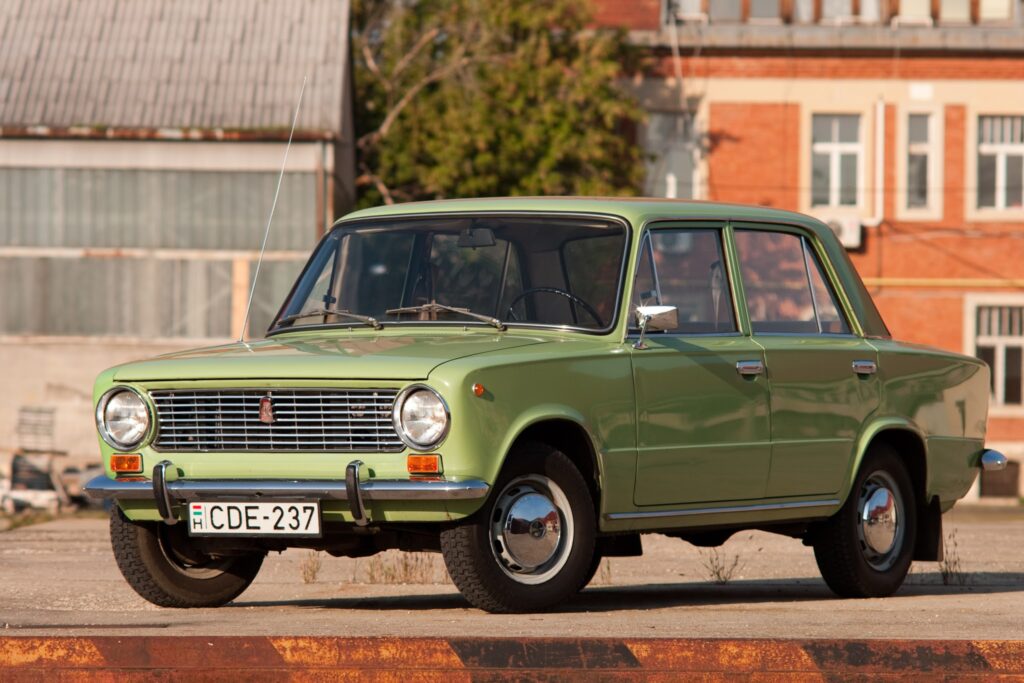
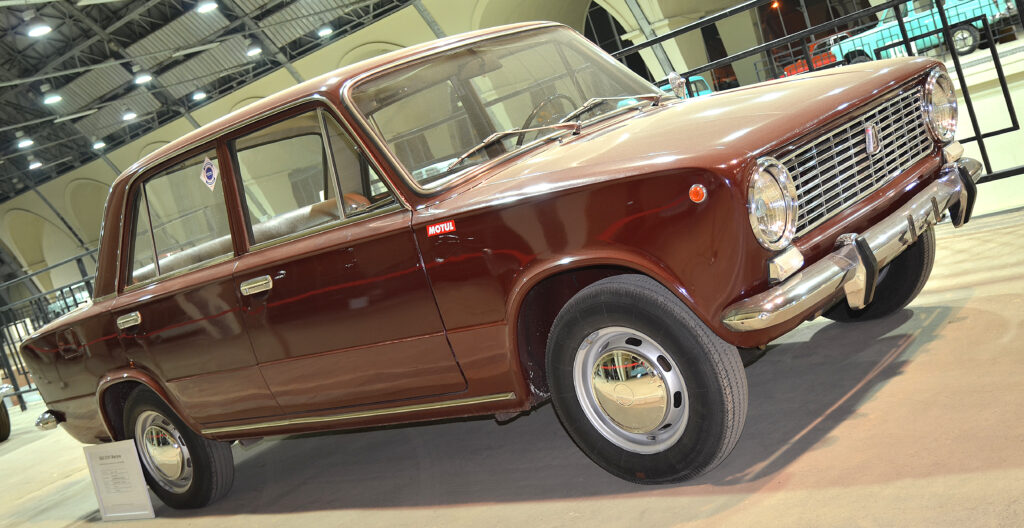
Image Credits:
Left: 1980 VAZ2101 Forrexp, CC BY-SA 4.0, via Wikimedia Commons
Right: VAZ 2101 – Lada Zhiguli 1200, Sergey Korovkin 84, CC BY-SA 4.0, via Wikimedia Commons
Collaboration between Russia and Fiat for the Lada was the largest technology transfer deal of the Cold War between the East and the West. The core model was the VAZ-2101 “Zhiguli”, based on the Fiat 124 (1966 European Car of the Year). It was also exported to Western countries as the Lada 1200/1300. As a testament to this collaboration, the city where the Lada factory was built was renamed Tolyatti after Palmiro Togliatti, the long-time head of the PCI.
The VAZ-2101 underwent hundreds of modifications to meet Soviet requirements, such as thicker body steel, a taller suspension for higher ground clearance, drum brakes at the rear for better reliability in mud and dirt, and a redesigned overhead-cam (OHC) engine that was more robust than the original unit offered in the Fiat.
Polski Fiat (FSO & FSM), Poland
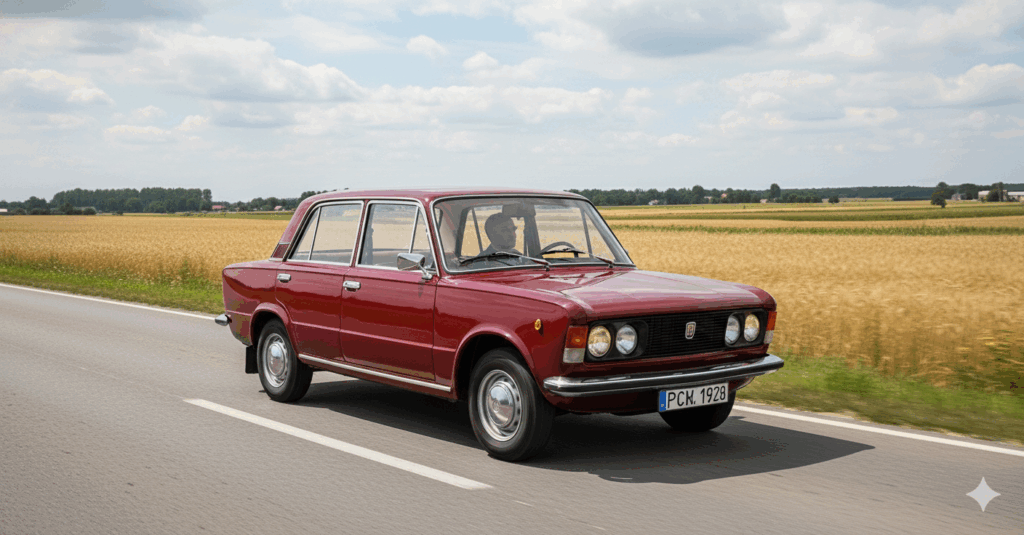
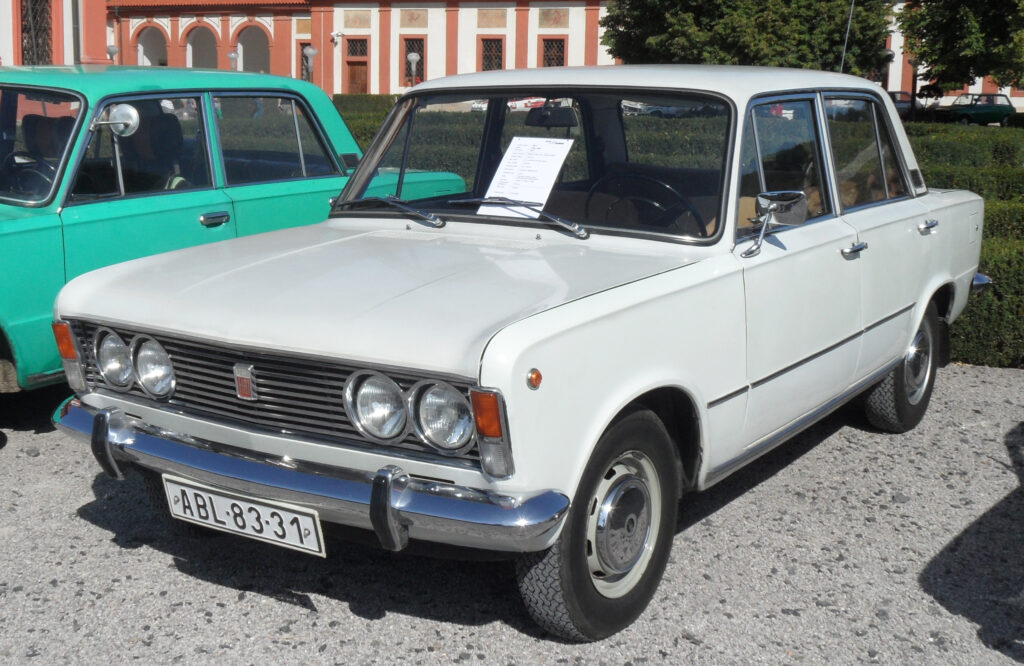
Image Credits:
Left: Polski Fiat 125p AI Generated
Right: Polski Fiat 125p – Stribrohorak, CC BY-SA 3.0, via Wikimedia Commons
The collaboration with Poland produced two iconic models for two different market needs.
The Polski Fiat 125p served as Poland’s workhorse for over 24 years. It was used as a taxi, a police car, an ambulance, etc. This car was so successful that production continued even after the licensing agreement expired, until 1991.
The other successful car was the Maluch, or Polski Fiat 126p. It was a modified version of the tiny Fiat 126 produced from 1973 until 2000. Maluch, or “The Little One”, successfully delivered mass motorization and made car ownership a reality for millions of Polish families. The vast majority of the world’s Fiat 126s were produced in Poland.
Zastava, Yugoslavia
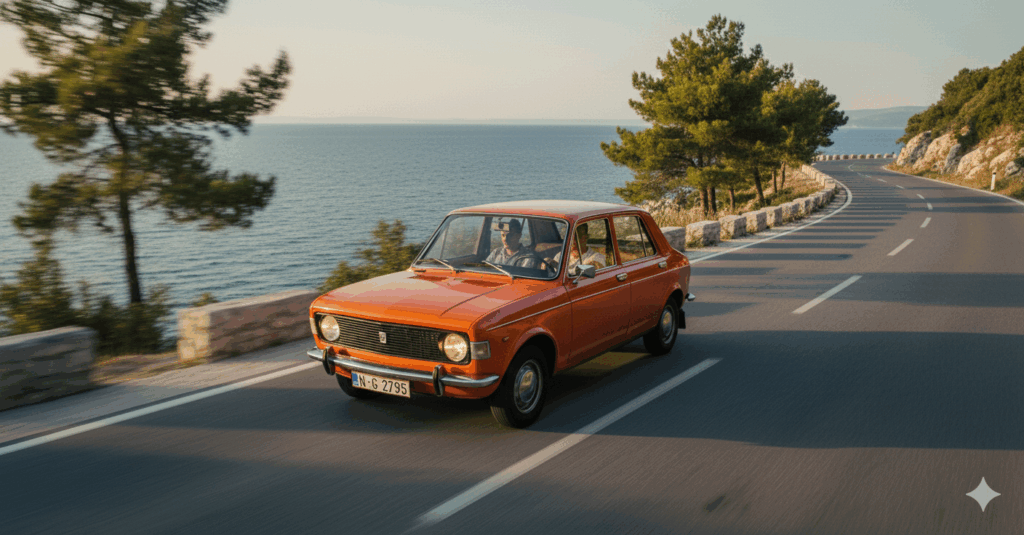
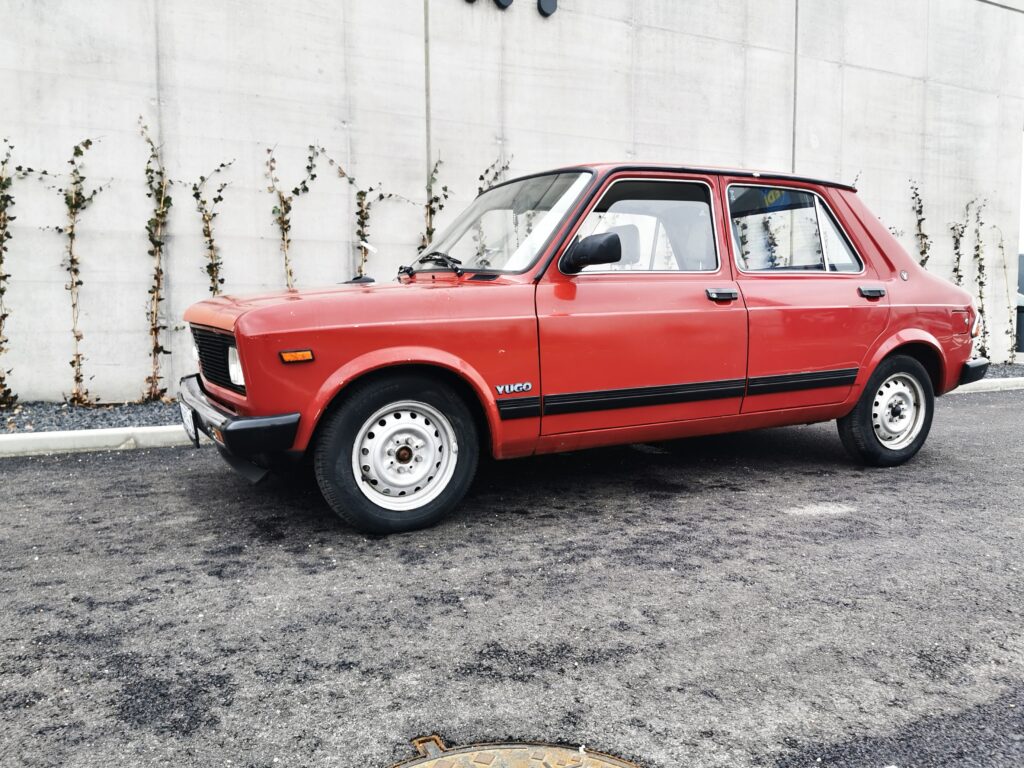
Image Credits:
Left: Zastava 101 AI Generated
Right: Zastava 101 Giffob, CC BY-SA 4.0, via Wikimedia Commons
Zastava’s partnership with Fiat preceded the Soviet deals, but it served as a successful template for the others.
The Zastava 750, based on the Fiat 600, was Yugoslavia’s “People’s Car”. The Fiat 600 also retains the honor of being the car that mobilized Italy. Zastava produced some other successful models as well, including the Yugo, which was exported to the US as the most affordable car. Zastava also made a model called the Zastava Florida, designed by the legendary Italian designer, Giorgetto Giugiaro.
PIRIN-Fiat, Bulgaria
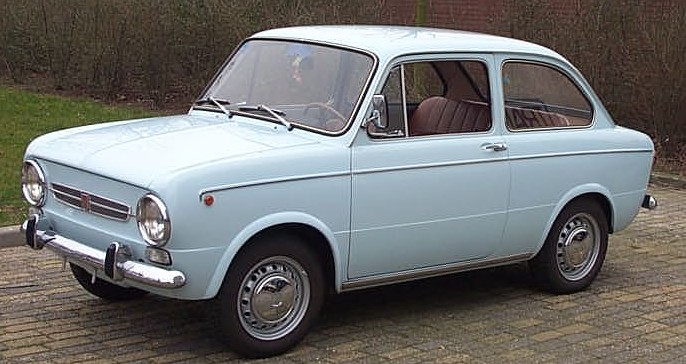
Image Credits:
Fiat 850 Special, Affiliated with Garage de l’Est, User:328cia, CC BY-SA 3.0, via Wikimedia Commons
This collaboration was the smallest and shortest-lived of the Fiat partnerships with the Eastern Bloc. The core models were based on the Fiat 850 and Fiat 124. From 1967 to 1971, cars were locally assembled from Completely Knocked Down Kits imported from Italy. The technology transfer agreement sadly ended in 1971, as the Soviet Union decided to focus on the Lada project.
Fiat’s contribution to the Eastern Bloc’s automotive industry was impactful and long-lasting. Though these countries failed to modernize and introduce Fiat’s newer models, they produced millions of cars that mobilized their citizens for decades and generated valuable foreign currency. This collaboration and the cars it produced are landmarks in the industrial history of these nations. It is hard to imagine what this part of the world would have looked like without Fiat’s willingness to work with them.
