Dacia Timeline from the 1100 to the Duster. Image AI Generated
As I have been researching Cold War-era cars from Eastern Europe, an interesting view has emerged. The automotive industry in the Soviet-influenced countries wasn’t just an indicator of the socio-political situation but also a harbinger of the 1980s anti-government revolution in many of these countries.
The extent of Soviet influence was reflected in the types and quality of cars manufactured in the country, which, in turn, played a significant role in citizens’ discontent with their governments. Human beings, by nature, compare themselves to others in their vicinity. The massive gorge that existed between the automotive industries on either side of the Iron Curtain left those on the east very unhappy with what they had access to, while their neighbors just a short distance to the west were building and driving some of the finest automobiles on the planet.
It is interesting to note that while Romania produced off-road vehicles like the ARO, it had no mass-produced passenger car before Dacia.
Most Eastern Bloc leaders recognized that they needed to partner with a Western manufacturer to provide their citizens with a reliable means of transportation. Fiat was the most common partner for most of the Eastern Bloc countries, resulting in Polski Fiat (Poland), Zastava (Yugoslavia), and Lada (Russia). Romania chose a different path to assert its independence (though only partially) from Moscow by collaborating with Renault to manufacture the forthcoming Renault 12 under the Dacia brand as the Dacia 1300.
The collaboration was established in the mid-1960s with the first cars rolling off the production line in 1968. It is interesting to note that while Romania produced off-road vehicles like the ARO, it had no mass-produced passenger car before Dacia. For most of the 1950s and 1960s, a passenger car was a rare luxury, reserved mainly for the party elite or obtained through long waiting lists for imported (mostly Soviet-made) models.
The main reason for this was the de-prioritization of efforts for building a passenger car. Unlike East Germany or Czechoslovakia, which had pre-war factories, the Romanian Communist regime prioritized heavy industry (steel, machinery) and utilitarian transport (trucks, tractors, military vehicles, and the ARO 4x4s) over passenger cars for its citizens. However, by the mid-1960s, the government recognized the social need. To meet that need and to demonstrate its industrial prowess, it decided to acquire the blueprints from a Western partner. They opened a tender that Renault won, paving the way for Renault’s local assembly. The first car under this licensing agreement was the Dacia 1100 (the Renault 8), a temporary model until tooling for the Dacia 1300 (the Renault 12) could be set up.
Once the licensing agreement with Renault was signed, there was a sense of urgency to produce the car. The Dacia 1300, based on the Renault 12, was a modern, front-engine, front-wheel-drive sedan, far more sophisticated than most of its Eastern Bloc counterparts at the time of its launch. This was initially a point of national pride. It was intended to be the ultimate expression of the socialist state’s ability to provide its citizens with a modern, affordable means of mobility, fulfilling the “car for every family” promise. It was widely seen as “Romania’s iconic car”. It started with this promise and fulfilled it well for a few years.
No other Eastern Bloc country had offered a brand new international model to its citizens.
The tooling, machinery, and factory construction for the all-new Renault 12 (Dacia 1300) were not yet ready in 1968. Still, the government wanted to start production immediately to get the factory running and train workers. Renault then allowed Dacia to build the older, simpler, and already established Renault 8 in the interim as the 1100. It was assembled primarily from Complete Knock-Down (CKD) kits, i.e, the parts were shipped from France and assembled in Romania. The 100th Dacia 1100 was gifted to Nicolae Ceaușescu, the then-leader of the Communist Party.

Dacia 1100. Image Credit: Klexy, CC BY-SA 3.0, via Wikimedia Commons
The French origin of the parts resulted in a high-quality vehicle. As the name suggests, it had a 1108 cc engine that produced approximately 46 hp. It featured a simple rear-engine, rear-wheel-drive layout. Though it was supposed to be an interim car, it sold well. Between 1968 and 1972, when 1300 production began, almost 37,500 of the 1100s were produced. Despite following a simple, soon-to-be-outdated drivetrain layout, it had some advanced features, such as disk brakes on all four wheels. It was extremely basic, but for a country starved of passenger cars, it provided an affordable, easy-to-maintain solution and aligned with the practical, no-frills philosophy of state production.
The Dacia 1300 actually launched in Romania before the Renault 12 debuted in France.
In 1972, mass production for the star of the show, the Dacia 1300, started. Mass production is the key here, since only a handful of units were produced in 1969. In fact, there is a little-known but fascinating story about the car. The Dacia 1300 actually launched in Romania before the Renault 12 debuted in France. This was a political arrangement where the Romanian government wanted to showcase the car at an important event – the parade marking Romania’s National Day on 23rd August. Presenting the new “People’s Car” at the parade was a matter of national pride and a symbol of the industrial achievement of the socialist nation. So Romania launched the car first, producing only 293 units from Completely Knocked Down (CKD) kits, and Renault held the official international launch later at the Paris Motor Show in October. No other Eastern Bloc country had offered a brand new international model to its citizens.
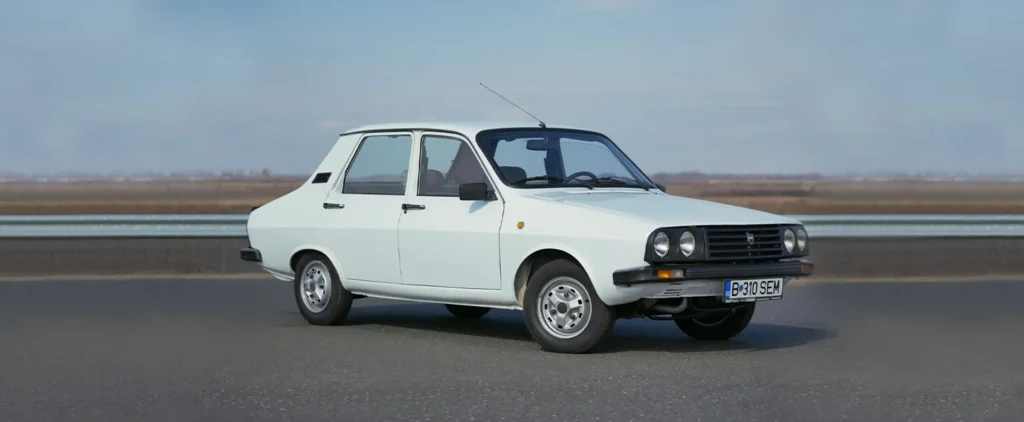
Dacia 1300. Image Credit: Renault Group
With the official production starting in 1972, Dacia started the process of “Localization” for the 1300. Slowly but steadily, an increasing number of parts began to be manufactured in Romania. Sadly, the quality of the locally made parts was inferior to that of the French parts, so as years passed and local content increased, overall quality declined. Nonetheless, the period between 1972 and 1978 was the brand’s high point. The 1300 was modern, reliable, and comfortable. It was also more advanced than other Eastern Bloc cars.
Romanians loved the car. Since its launch, it was in high demand, leading to long waiting lists. Seeing the enthusiasm, Dacia quickly expanded the model range to include the 1300L (Luxury), 1301 Lux Super (Super Luxury), and 1300 Break (Estate). The Super Lux came with features such as a heated rear screen and a radio. As expected, this model was reserved for the Communist Party Elites.
By 1977, the production of the 1300 was almost 100% localized. In 1978, the license agreement with Renault expired and wasn’t renewed. This was a turning point for Dacia, as it was now entirely on its own for design, engineering, production, and innovation. On the one hand, Dacia continued refreshing the lineup with facelifts and new variants, but on the other, the quality of locally made components kept deteriorating.
Renault was launching new vehicles with innovative features elsewhere, but none of those technologies made it to Dacia. The company relied on the same Renault 12 platform and engine for almost 35 years.
The notable upgrades included the restyled 1310 in 1979 with quad headlights, inspired to a large extent by Renault’s own updates to the R12, the 1310 Sport in 1981, and, after a long gap, the Dacia Nova in 1994. The production of the Nova had been delayed since 1983, indicating that it was already outdated at launch and suffered from reliability and rust issues.
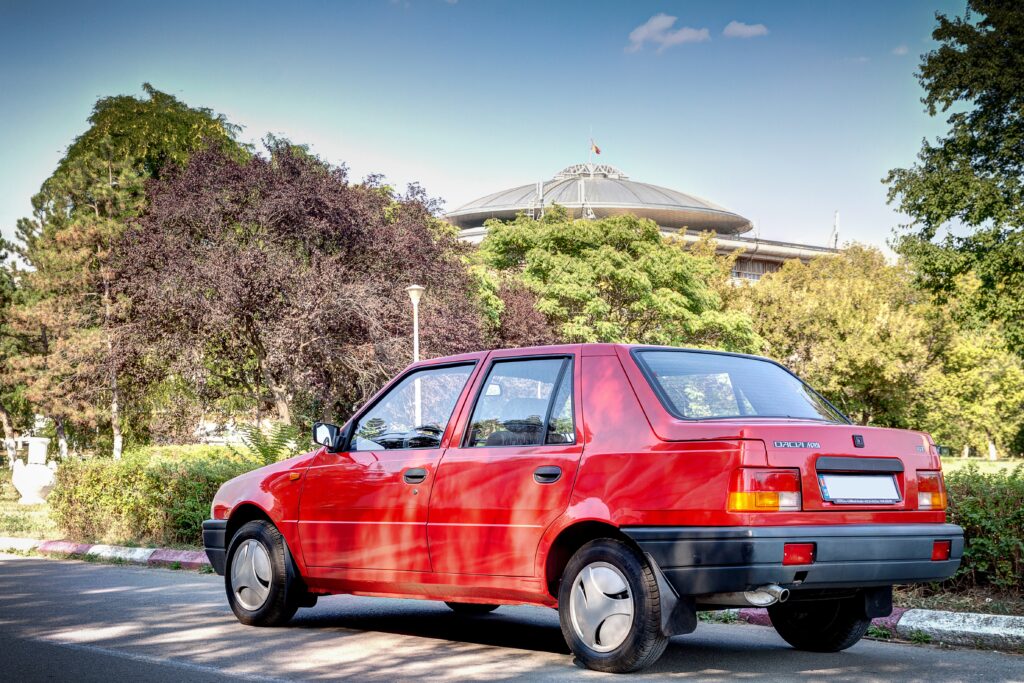
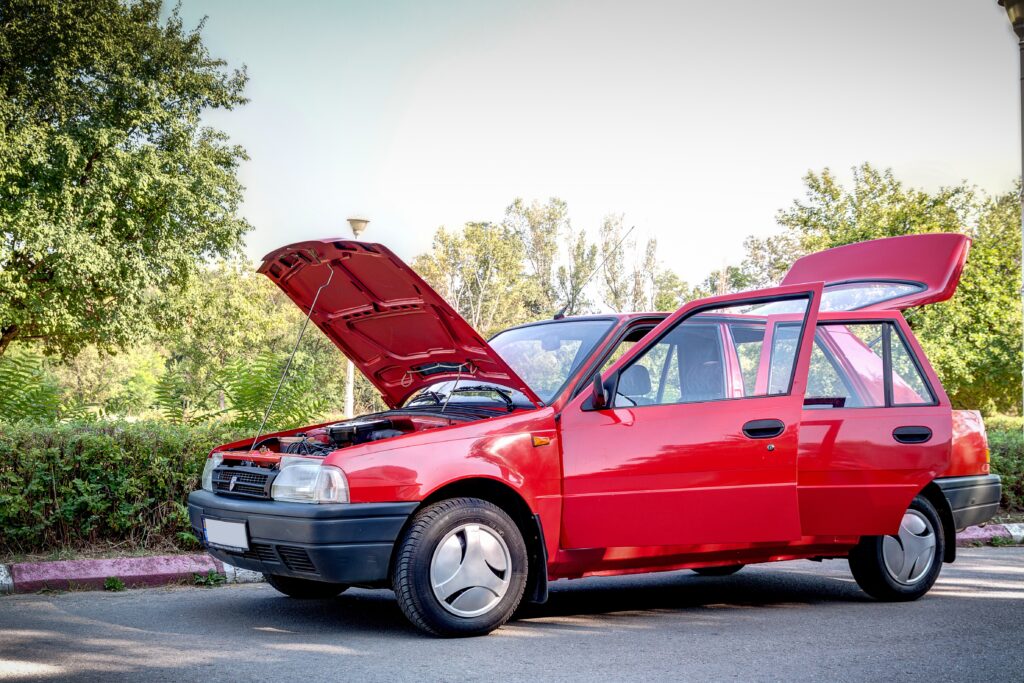
Dacia Nova. Image Credit: Răzvan Corneliu Vilt, CC BY-SA 4.0, via Wikimedia Commons
With Dacia’s factory rolling out vehicles since 1968 and local component manufacturing starting in the early 1970s, there was an expectation that sufficient local expertise had been developed to produce quality products. Sadly, this wasn’t true. After Renault’s exit from the venture, quality continued to decline, with cars suffering repeated reliability issues, rust, and other problems. Renault was launching new vehicles with innovative features elsewhere, but none of those technologies made it to Dacia. The company relied on the same Renault 12 platform and engine for almost 35 years. The last 1300 was produced in July of 2004 with a total production run of nearly 2 million units.
Like many other Eastern Bloc nations, the political situation played a significant role in Dacia’s fate. Romania had aspired to greater independence from Moscow than some of its counterparts (I encourage you to read the story about how Romania managed this, while Czechoslovakia was invaded by the USSR when it tried to diverge from communist doctrine). The position led to increased contacts with the West, including many loans. However, in the 1980s, the country’s leader, Nicolae Ceaușescu, made a drastic decision to pay off Romania’s entire foreign debt in a short timeframe. The debt-repayment push and the corresponding austerity measures led to a total retreat into isolation and poverty. The resulting economic stagnation lowered the standard of living by up to 40% in the 1980s.
The Dacia, which was supposed to be a symbol of modernity, became a symbol of failure and sacrifice by the mid-1980s. The long waits, poor quality, inability to choose even a color due to export prioritization, and subsequently the inability to use the car due to fuel rationing turned national pride into widespread frustration. There was a clear divide between those with privilege and the rest, with the best models, like the Lux Super, reserved for officials.
Dacia offered an established factory, a trained workforce, and lower manufacturing costs than Western Europe.
The relationships with Western countries also led to many diplomats being posted to Romania. These foreign officials used modern imported cars clearly marked with yellow diplomatic plates. The presence of these cars served as a constant, tangible reminder of the prosperity enjoyed outside the Iron Curtain, deepening the sense of deprivation among the people. This “disconnect” between the state’s propaganda of prosperity and the reality of daily hardship (food rationing, freezing homes, unusable cars) was a primary reason behind the growing political repression and unrest that culminated in the 1989 Romanian Revolution.
After the collapse of communism, Dacia faced tough new competition from modern, imported Western European cars. It rapidly lost its export markets and struggled at home, surviving on its only asset: a domestically produced, extremely inexpensive car.
In 1999, Renault took a controlling stake in Dacia. Renault’s CEO at the time, Louis Schweitzer, had a vision for “Project 90”, to produce a modern, reliable, and affordable car around €5,000. Dacia offered an established factory, a trained workforce, and lower manufacturing costs than Western Europe. He saw an opportunity to reinvent Dacia as a budget brand in Renault’s portfolio. As a result, the highly successful Dacia Logan was launched in 2004. Worldwide, the Logan was manufactured in many countries, in both petrol and diesel versions, serving as a personal and commercial vehicle.
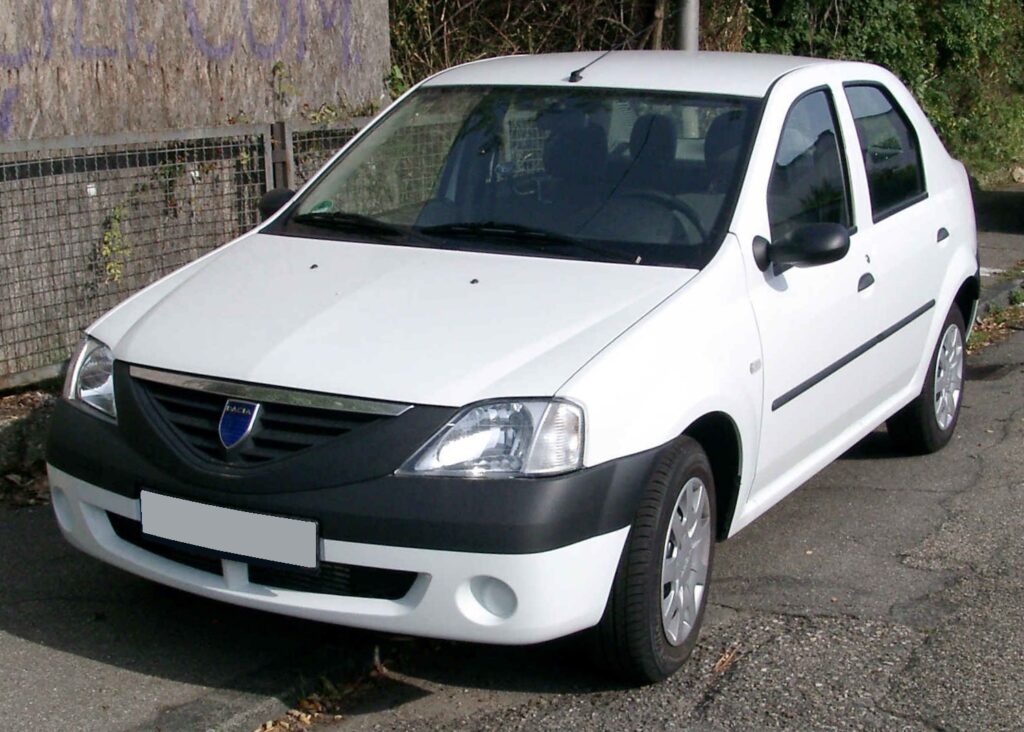
Dacia Logan. Image Credit: Rudolf Stricker, Attribution, via Wikimedia Commons
As of 2025, Dacia is arguably in the strongest position in its history. No longer just a “budget” subsidiary, it has evolved into the financial engine of the Renault Group and a distinct brand in Europe. It is recognized as the Golden child of the Renault group, operating with healthy margins. It has somehow remained immune to the crisis affecting the other European manufacturers. The brand recognition is strong, and as other cars get more expensive, Dacia is attracting customers from priced-out brands, offering not a “cheap” car but one that delivers value for their money.
