The post World War II trajectory of Europe looked very different for countries on either side of the Iron Curtain. For over forty years, the effects of public policy resulted in vastly different lifestyles for citizens on the two sides. While Western countries created their own flavors of capitalism, the Eastern side progressed under the overarching umbrella of socialism and Soviet influence.
Among the many areas where Capitalism and Socialism were on full display for the four-plus decades, the automotive industry was perhaps the most visible. I would even venture to say that the poor state of the automotive industry on the Eastern side, and its influence, strongly contributed to the collapse of the Soviet empire. The socialist countries provided for their citizens and maintained a uniform standard of living for the majority of their population. However, when these citizens witnessed the rapid pace of development in the West, particularly the impressive automobiles produced in Germany, France, Italy, and the UK, their desire to own such vehicles fueled their dissatisfaction with their system of governance, ultimately contributing to its failure.
The governments of Eastern Bloc countries needed to provide a means of personal transportation for their citizens. The socialist system just couldn’t support multiple automotive manufacturers. Neither did they have the funds to invest in R&D, nor did they believe in producing different types of automobiles. Therefore, such countries invested in a single primary company to manufacture cars for their citizens. In East Germany, it was the Trabant. In Czechoslovakia, it was Skoda. In Romania, it was Dacia. In Poland, it was Polski Fiat. And in Yugoslavia, it was the Zastava. While several of these established technical collaborations with Western manufacturers, such as Fiat, others, like the Trabant, decided to go it alone, and that was plainly visible in the quality of the vehicles produced. The level of collaboration with a foreign manufacturer served as a proxy indicator of the extent of Soviet influence in the country.
Tito couldn’t adopt capitalism, and having seen the disastrous outcomes of the war, he didn’t want to be a part of any military alliance.
At the time of its formation, Yugoslavia established an economic system largely modeled after the Soviet system. However, Yugoslavia diverged from the Russian ideology earlier than many others in the Eastern Bloc, primarily due to Josip Broz Tito’s staunch assertion of Yugoslavia’s independence, which led to a fallout with Stalin in 1948. These were the early years after WWII, and the Soviets had a lot to focus on rather than risk military action to rein in Tito (as they did in Czechoslovakia in 1968). The Eastern Bloc found other ways to punish Yugoslavia, including a severe economic embargo that effectively isolated it.
The economic hardships endured due to the isolation compelled Yugoslavia to find an alternative to the Soviet system. Tito couldn’t adopt capitalism, and having seen the disastrous outcomes of the war, he didn’t want to be a part of any military alliance. These principles formed the foundation of Yugoslavia’s unique worker self-management and non-aligned foreign policies.
Eastern Bloc countries that were part of the Soviet-dominated Comecon economic bloc prioritized investment into heavy industries and military manufacturing, leaving little for consumer goods. The results of this policy were evident well into the 1970s and 80s, when the quality, choice, and availability of goods for the average citizen were significantly inferior to those of their Western European neighbors.
This agreement represented the economic equivalent of what was happening on the political front, i.e., a divorce from the Soviet Union.
Yugoslavia, on the other hand, driven by its non-aligned stance, started investing in consumer goods relatively early after the war. This significantly enhanced its product development capabilities and enabled it to gain access to better technology and markets. This resulted in notably better-quality products manufactured there. Zastava was also a beneficiary and fared much better compared to the Trabant, Lada, and Moskvich, among others.
Zastava Automobili emerged from the collaboration of Zastava, a military equipment and vehicle manufacturer, and Fiat in 1953. The significance of this agreement was much larger than a commercial licensing deal. This agreement represented the economic equivalent of what was happening on the political front, i.e., a divorce from the Soviet Union. The Zastava Automobili factory in Kragujevac, Serbia, became a symbol of the country’s industrial strength. It achieved considerable success by providing wheels for the country and also exporting to several markets worldwide, including the United States. The not-so-successful story of the Yugo in the US is the subject of an upcoming article, so keep an eye out for it.
Of the first cars this collaboration produced, the most notable was the iconic Zastava 600/750/850. Based on the Fiat 600, it became the first serially manufactured car in Yugoslavia and earned its affectionate nickname, the “Fića”. Between 1955 and 1985, over 900,000 units were produced. The 600 nameplate was updated to 750 in 1960 with the introduction of a larger 767 cc engine, while the 850, introduced in 1980, received an 843 cc engine. These cars were inexpensive to purchase, economical to operate, and easy to maintain, which made them the preferred choice of drivers across Yugoslavia. While other manufacturers, such as VW, produced the Polo, the Fića remained the most popular vehicle. It is a testament to the love people had for this car that the design continued until 1985. Zastava also benefited from the country’s 41% tax on foreign-manufactured cars.
Workers in Yugoslav factories, including those at Zastava, enjoyed a significantly better quality of life than their counterparts in other Eastern European countries.
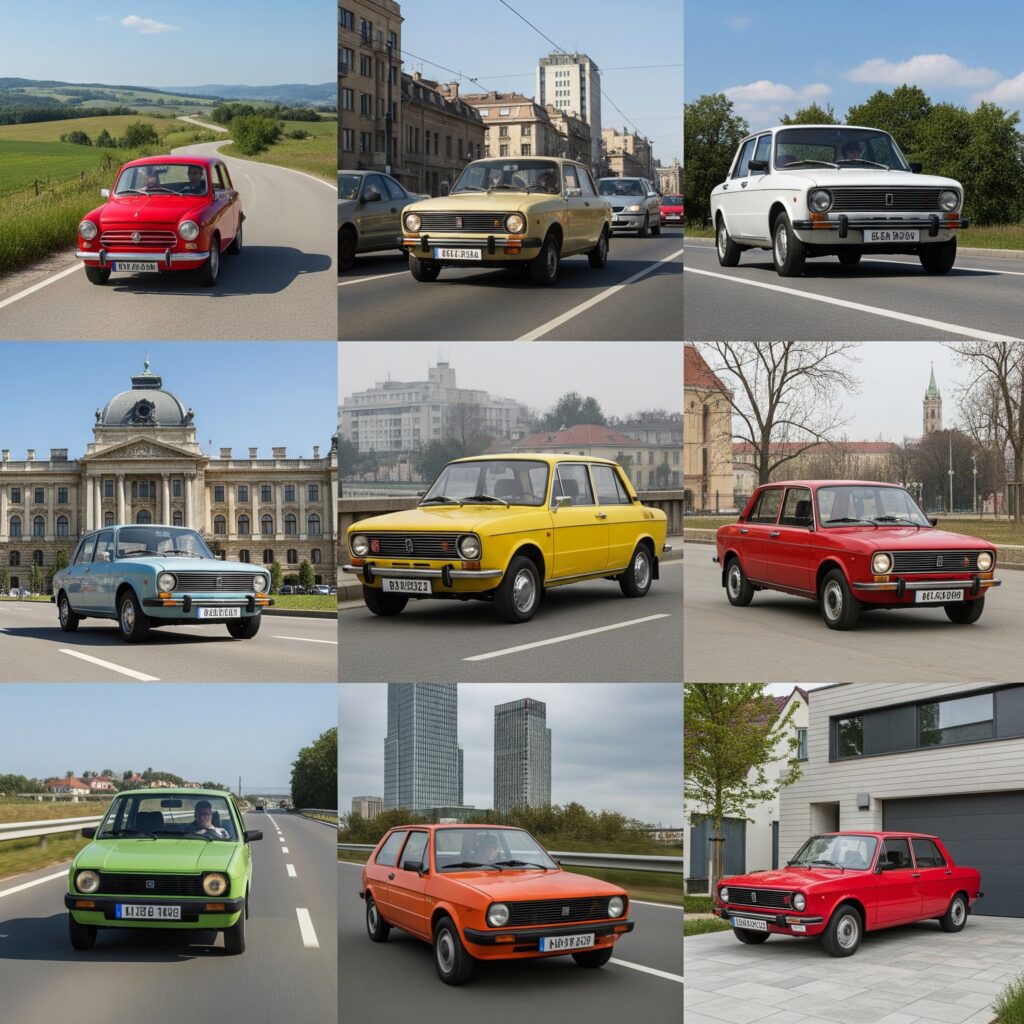
The technical collaboration produced other successful vehicles, such as the Zastava 101, based on the Fiat 128. The 101 had several incarnations, including the Zastava 128, Zastava 1100, Zastava 1300, and Zastava 311/Skala, among others. Zastava also produced a rear-wheel-drive sport sedan, the Zastava 1500, which earned high praise for its handling.
Workers in Yugoslav factories, including those at Zastava, enjoyed a significantly better quality of life than their counterparts in other Eastern European countries. Under the self-managed governance system, Zastava prospered, producing over 200,000 vehicles annually by the 1980s, a significant share of which were exported.
Its most ambitious export undertaking was the Yugo, which was exported to the US from 1985 and marketed as the cheapest new car money can buy. Its launch price of $3,900 was unprecedented. Combined with the rising fuel prices, the Yugo quickly gained traction, selling as many as 49,000 vehicles in 1987. However, the enthusiasm proved short-lived, as Yugo’s quality issues and negative media coverage hurt sales. The car was ridiculed a lot and became the butt of many jokes. Ultimately, in 1992, after several years of losses, the Yugo ceased production in the US. Quality wasn’t the only contributor to its failure, even though it was the most significant one. The other major factor was the war in Yugoslavia, leading to sanctions and expensive parts. That discussion, however, is beyond the scope of this article.
The quality problems with the Yugo exposed the challenges of Yugoslavia’s worker-managed manufacturing system. The lack of clear ownership prevented investments in critical areas, such as design and R&D, and introduced inefficiencies into the system.
Though the Yugo failed in the US, it had a significant impact on the US automotive industry. The low price made other manufacturers realize that there is a market for smaller, lower-priced, fuel-efficient vehicles in the US. This ultimately benefited customers as more manufacturers started building smaller cars. It is worth noting that in Europe, where the effects of the war’s sanctions were less severe, the Yugo continued to be manufactured and sold until 2008.
The quality problems with the Yugo exposed the challenges of Yugoslavia’s worker-managed manufacturing system. The lack of clear ownership prevented investments in critical areas, such as design and R&D, and introduced inefficiencies into the system. Delays in decision-making, budget constraints, and several other factors contributed to the decline in quality. The political instability after Tito’s death, the revolving door of presidents, and most decisively the civil war leading to the breakup of Yugoslavia into several countries hurt the entire manufacturing setup of the country.
The NATO bombings in the aftermath of the civil war also impacted Zasatva. Direct missile attacks severely damaged the facilities, leaving their future in question. The company showed remarkable resilience, however, coming back online within 6 months to produce new cars. This highlighted the company’s inherent self-reliance and collective effort, built on a worker-managed system.
The Zastava brand ceased to exist in 2008. Fiat took over the facilities after signing an agreement with the Serbian government that gave it a 67% stake in the company. The Kragujevac plant, renowned for producing the iconic Zastava cars, is now part of the Stellantis group, the fourth-largest automaker in the world.
Even after so many years, the nostalgia for the original Zastavas remains. Not just in Yugoslavia, but globally, there is a fan base of lovers who come together frequently to celebrate these cars. This base is united by a shared appreciation for Yugoslavia’s history and cultural significance, as well as for Zastava’s products. I sincerely hope that fans will keep their cars in great shape for years to come, for the benefit of future generations.
